The Strathmore Agrifood Innovation Center, through its Strathmore Horticulture Accelerator Program for Exports (SHAPe), is committed to enhancing Kenya’s horticultural export potential, with a strong focus on avocados. SHAPe empowers exporters by providing training, technical support, and market access to improve competitiveness in the global arena.
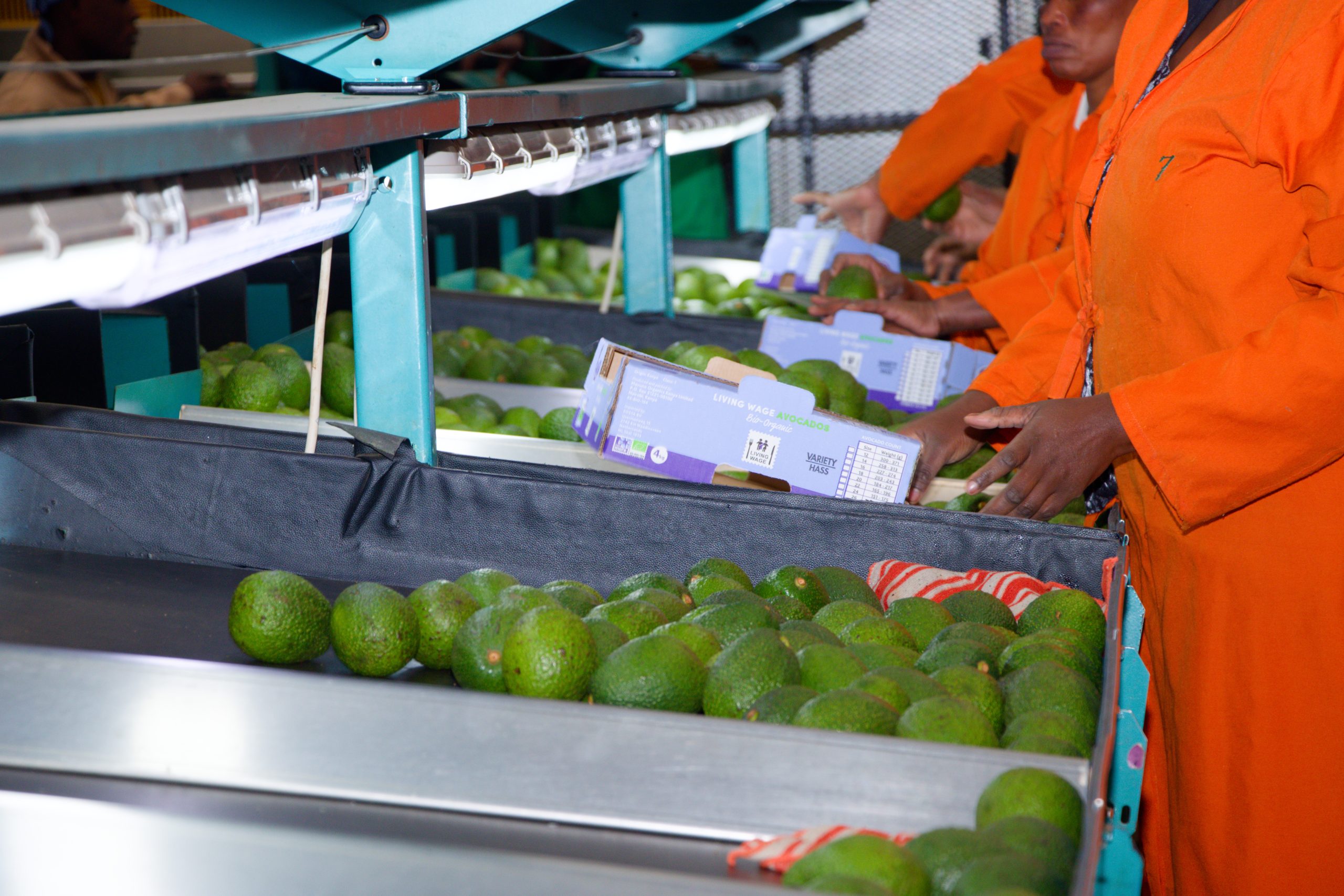
As part of this mission, SHAPe has partnered with exporters such as Mavuno Organics Kenya Limited, based in Ruiru, Kiambu County. Mavuno Organics plays a critical role in training farmers, preparing them for inspection and certification for export markets, ongoing technical support as well as offtake of avocados.
Through SHAPe, thirteen (13) Agronomists from Mavuno Organics received training on Avocado Agronomy and facilitation to onboard and train over 900 avocado farmers in Good Agricultural Practices (GAPs). Additionally, they have supported three medium-largescale farms to undergo KEPHIS inspection and attain certification for export to China. These include one farm in Ruiru (110 acres) and two in Nakuru (16 and 10 acres respectively).
On Tuesday 29th July, 2025, SHAPe visited one of these farms in Gatanga, Murang’a County. The 110-acre avocado farm hosts more than 900 Hass avocado trees planted in 2018. It exemplifies excellence in avocado farming and successfully underwent KEPHIS-China inspection, and primarily targets the Chinese export market, courtesy of the technical support from Mavuno Organics. During peak seasons, each tree yields an average of 250 kg of avocados with optimal yield on the farm being 400kg per tree. Despite following recommended pest control measures, the farm faces high costs particularly in cost of pheromone traps for monitoring and control of the three major quarantine pests of concern to China market being the False Codling Moth-FCM, Bactrocera Dorsalis commonly known as Oriental fruit fly and Ceratitis Capitata, commonly known as Mediterranean fruit fly. To put in context, one acre requires four FCM traps, each costing KES 800 and at least six fruit fly traps each costing KES350 -totalling KES5,300. These traps need replacement every two months -at a unit cost of KES200 for the FCM lure and KES100 for the fruitfly traps bait respectively.


In Gatanga, SHAPe team paid a visit to Mr. and Mrs. Mungai, lifelong subsistence farmers who recently transitioned into commercial avocado farming after receiving training from Mavuno Organics. On their farm, they grow 35 avocado trees, blending traditional pest control methods such as using fermented maize flour and molasses traps with improved pest management practices learned through Mavuno’s Agronomy program. Remarkably, one of their oldest trees, planted over 40 years ago, yields more than one tonne of avocados during the peak season. The couple praised Mavuno’s training for significantly boosting their productivity, facilitating them to acquire Fair Trade and GlobalGAP certification and a consistent market for their produce. They are now working towards achieving KEPHIS-China certification, a prerequisite to export to the Chinese market.
Likewise, Mr. Cyrus Njuguna, another small scale farmer, has adopted commercial avocado farming on his 3-acre farm with more than 75 trees following training from Mavuno. He employs an Integrated Pest Management (IPM) approach, combining traditional methods like molasses, fermented maize flour, and Mexican marigold smoke with modern techniques of pheromone traps to protect his fruits.
Despite these efforts and successes, several challenges hinder broader market access. Compliance with export requirements, particularly for the Chinese market, remains financially demanding. For instance, Kenya Plant Health Inspectorate Service(KEPHIS) charges per acre for farm inspection/audit are a prohibitive cost for many small-scale farmers. Similarly, the price of pest control traps is unsustainable for many. Unless addressed, these constraints will limit the number of farms which can get the KEPHIS-China Farm codes as well as volume of avocado exports to China.
To unlock the full potential of Kenya’s avocado sector, there is a pressing need to explore more cost-effective and accessible pest control methods, ease documentation and review the cost of KEPHIS-China certification and auditing models. Easing these burdens would enable more farmers to meet international standards and significantly increase avocado export volumes to China.
Article by SAFIC Communications