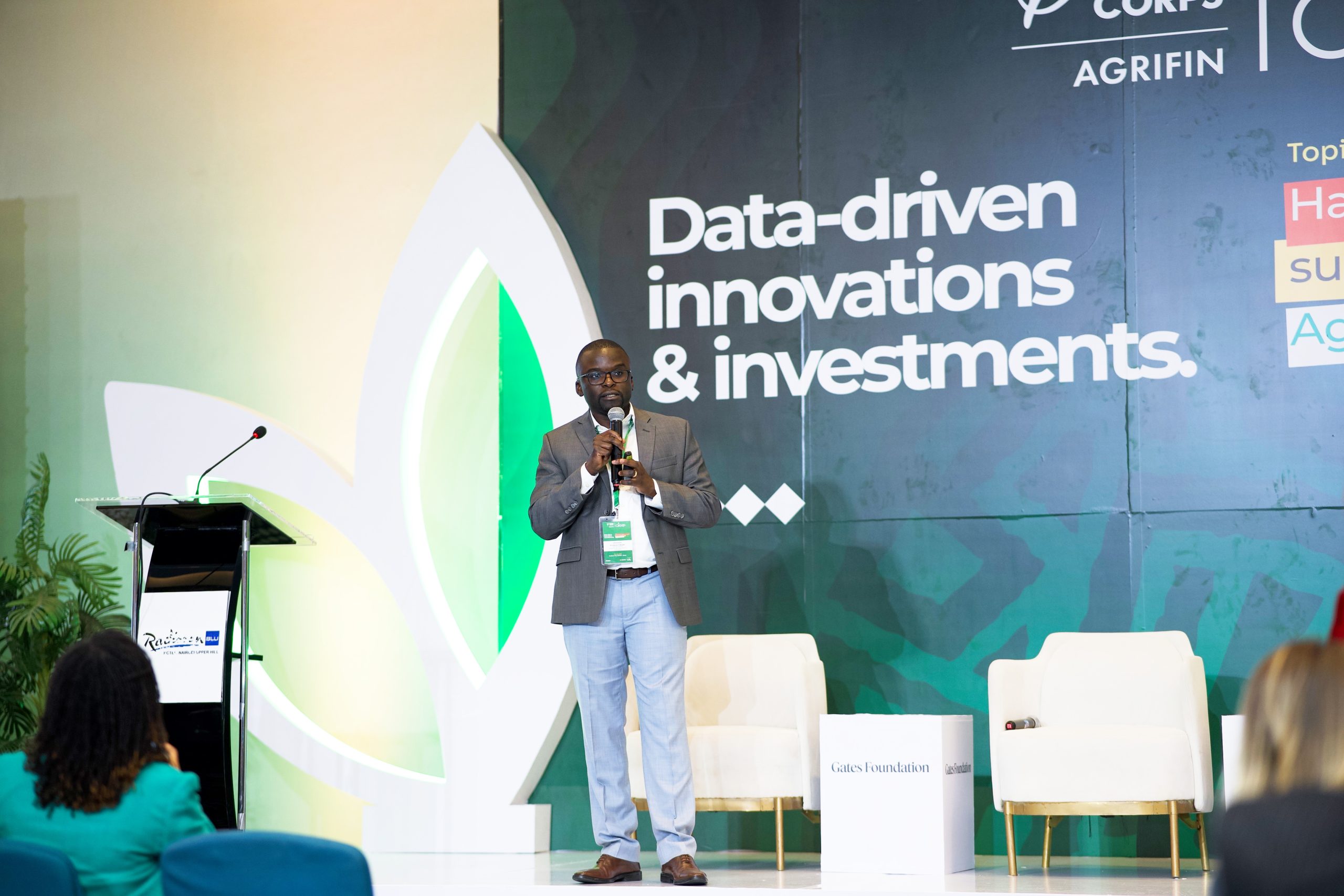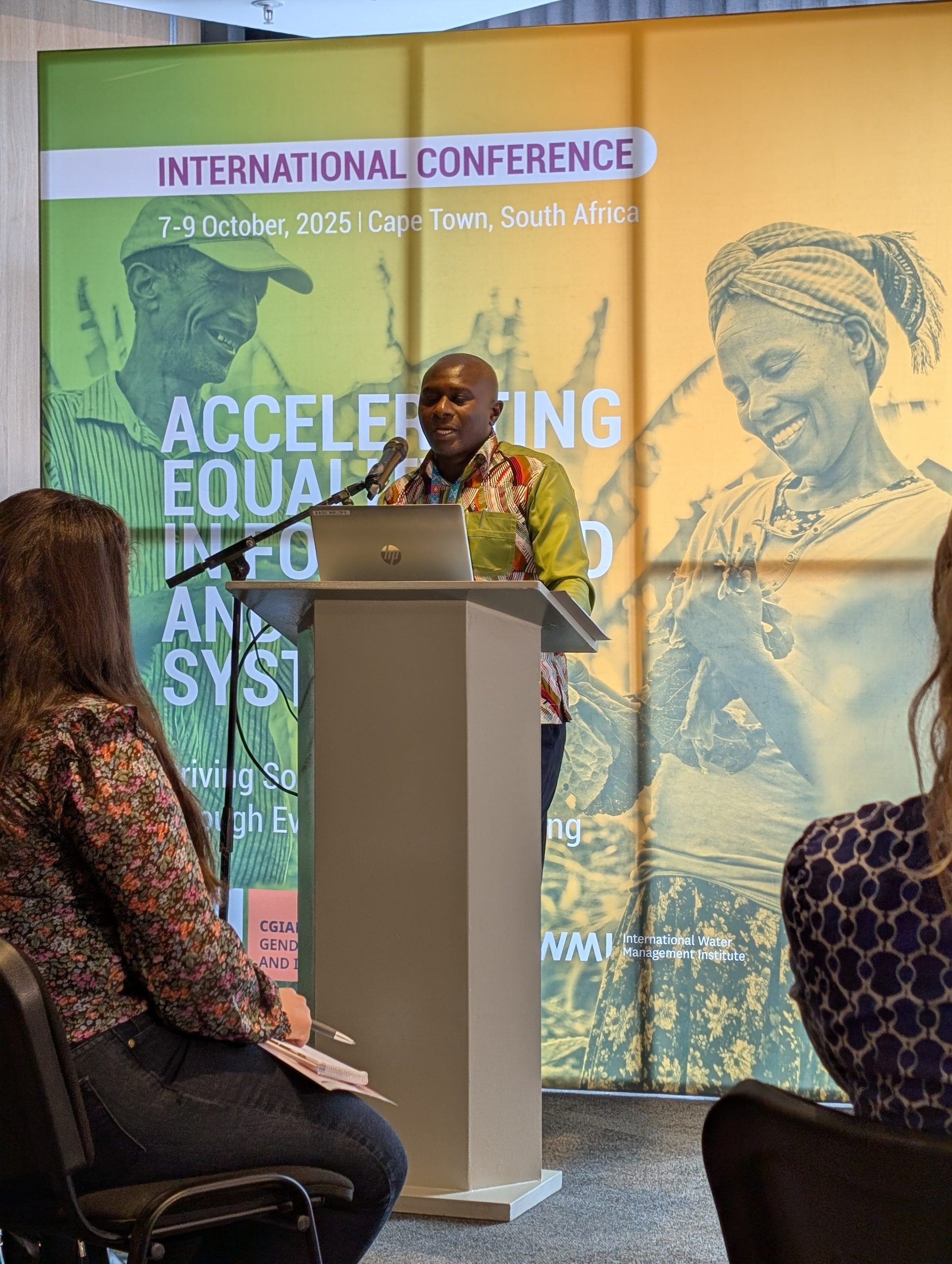
Last week, from 7th to 9th October 2025, the Strathmore Agri-Food Innovation Centre (SAFIC) took part in the “Accelerating Equality in Food, Land and Water Systems: Driving Solutions through Evidence and Learning” conference held in Cape Town, South Africa. During this high-level event, the Centre’s Director, Prof. S. Wagura Ndiritu, delivered an engaging presentation titled “Gender Dynamics in Intra-Household Decision-Making and Its Effects on Livestock Outcomes in Ethiopia.” His presentation offered fresh insights into how gender relations and power dynamics within households influence livestock production, marketing, and economic outcomes in pastoral communities.
Ethiopia is home to more than 10 million pastoralists whose livelihoods and wealth are largely dependent on livestock. Despite the sector’s potential, it faces a series of persistent challenges such as limited access to quality feed, animal health services, water resources, and finance. In addition, the production and marketing systems remain fragmented, often leaving pastoralists with low margins and limited opportunities for growth. While these systemic challenges are well documented, our research brought attention to a less visible but equally important factor the dynamics of decision-making within households and how they affect livestock productivity and income distribution.
The study underscored that in many pastoral communities, men traditionally dominate household decisions related to resource allocation, livestock investment, and marketing. However, evidence from Ethiopia and Kenya shows that women’s involvement in livestock management leads to better outcomes in animal health, resource utilization, and overall productivity. According to findings from the study, households where women participated in decision-making either jointly with their spouses or independently recorded significantly higher incomes compared to those where decisions were made solely by men. The results demonstrated that women’s inclusion in household decisions is not merely a matter of equity but a key driver of improved economic and nutritional outcomes for entire families.
The empirical study was conducted in the South Omo Zone of the South Ethiopia Regional State, covering Malie, Bena-Tsemay, and Hamer districts. Data were collected from 1,000 households through systematic sampling, and advanced statistical methods were used to analyze the relationship between gender dynamics and livestock performance. The findings revealed that households practicing joint decision-making between spouses and children experienced higher total incomes from livestock sales and related products. Furthermore, when women made decisions independently, livestock management practices improved, leading to better productivity and efficiency across the value chain.


Beyond identifying gender-based gaps in decision-making, our presentation also proposed a series of interventions designed to address both gender and structural barriers in livestock systems. These include capacity-building programs for pastoralists focusing on livestock management and market orientation, enhancing access to finance through digital payment systems, and strengthening animal health and traceability frameworks to improve market access. The study also recommended initiatives that support women’s training, entrepreneurship, and leadership in pastoral communities, recognizing their central role in household welfare and livestock sustainability.
In conclusion, the research emphasized that gender-inclusive decision-making is a powerful catalyst for transforming pastoral livelihoods. Empowering women to participate equally in household and livestock-related decisions leads to stronger economic performance, better family nutrition, and more resilient communities. As Prof. Ndiritu noted during his presentation, when women’s voices are valued in household decisions, the benefits extend far beyond individual families to positively influence communities, markets, and the broader agri-food system. Through such evidence-driven research and advocacy, SAFIC continues to advance its mission of fostering equality, innovation, and sustainable growth in Africa’s agricultural and food systems.
Article By SAFIC Communications