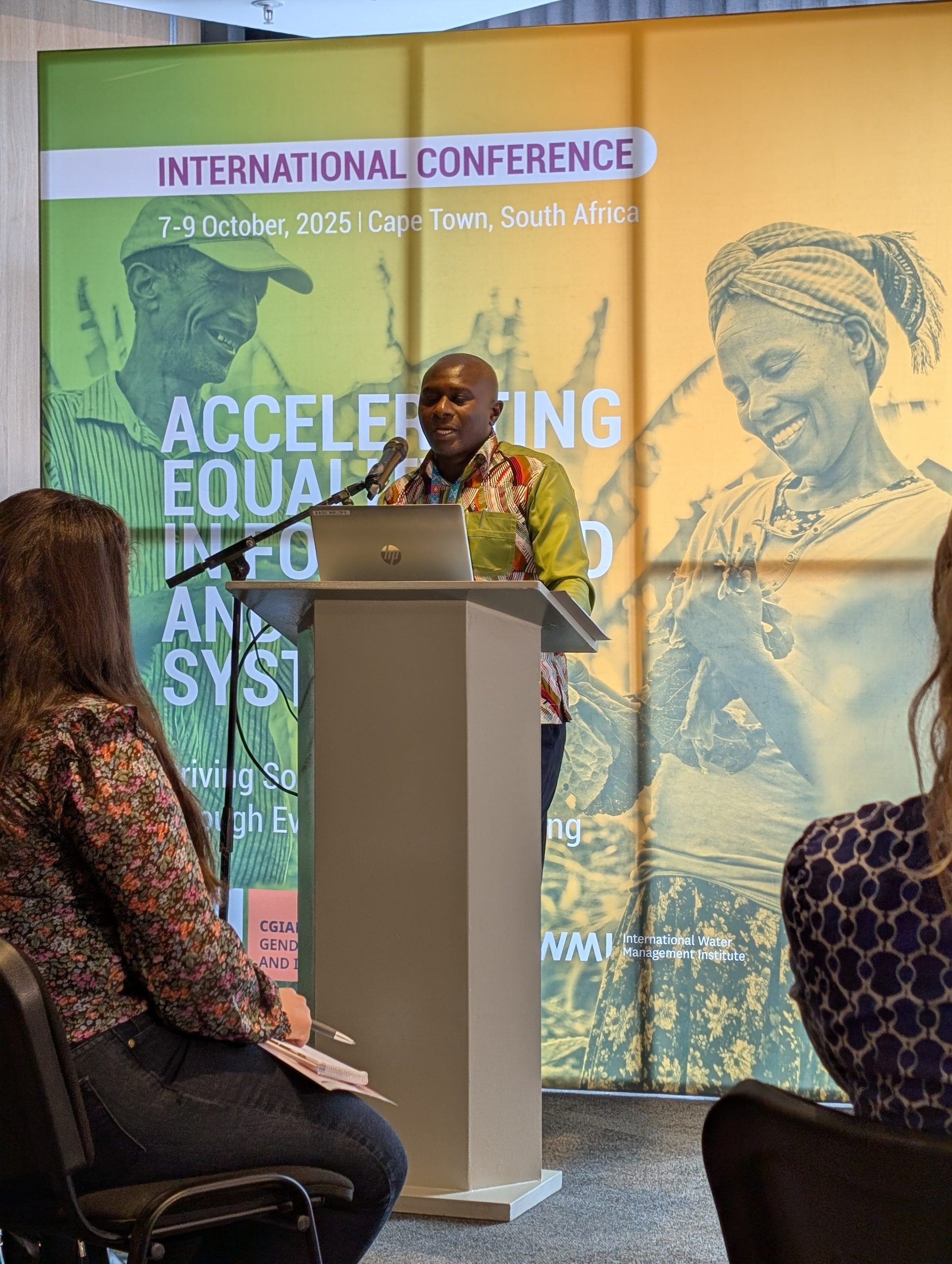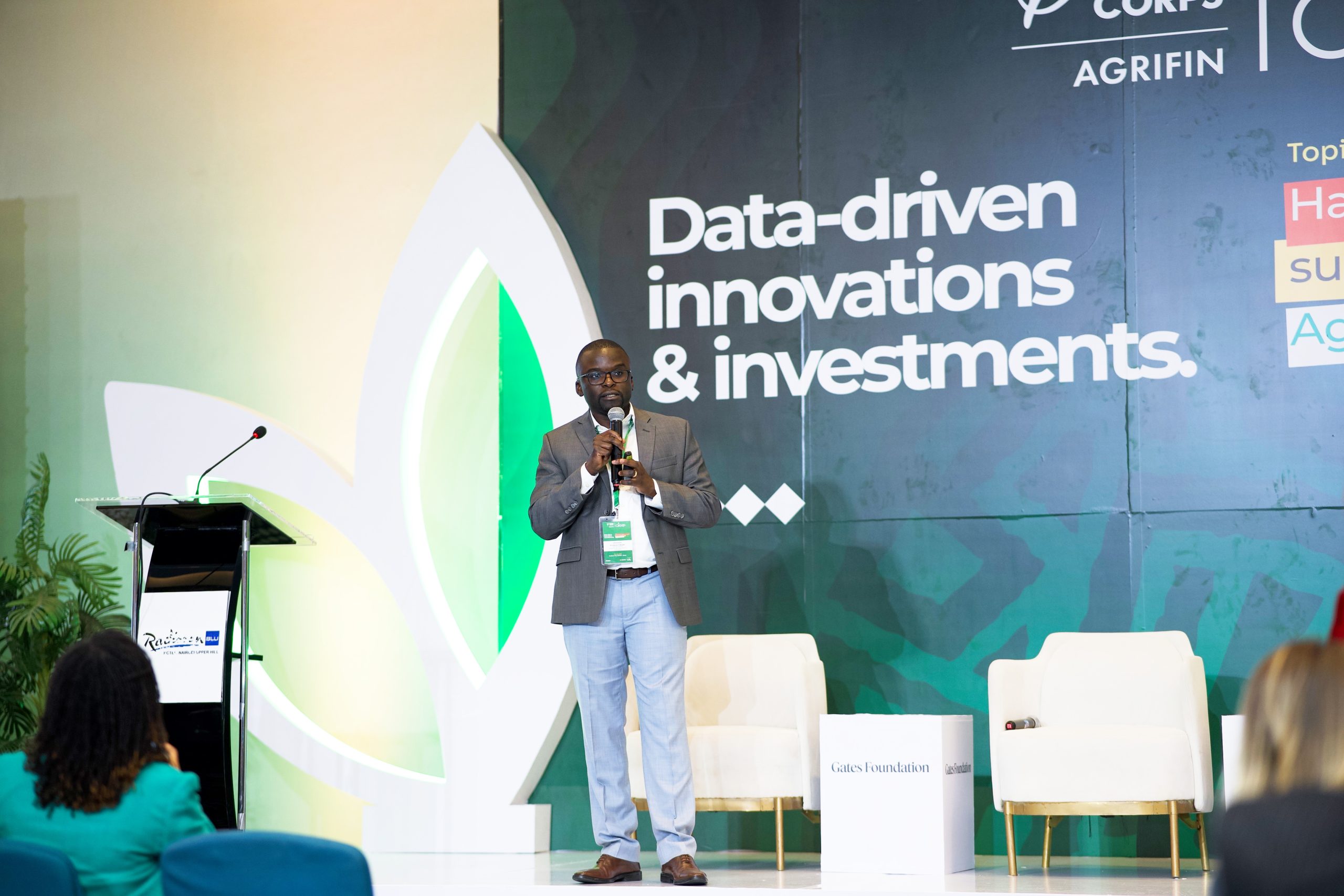
On Tuesday, 14th October 2025, during the 9th Annual Learning Event, hosted by Mercy Corps AgriFin, Dr. Denis Fidalis Mujibi, Associate Director of Market Intelligence at the Strathmore Agri-Food Innovation Centre (SAFIC), delivered a thought-provoking session titled “Building Blocks for a National AI-driven Agriculture Extension System.”
In his presentation, Dr. Mujibi invited participants to reimagine agricultural extension not as a static service, but as a dynamic, intelligent ecosystem powered by artificial intelligence, localized data, and real-time feedback loops. He painted a vivid picture of Farmer Wekesa, a smallholder juggling scarce resources across multiple crops and livestock, constantly bombarded with fragmented and sometimes conflicting advice. “Everyone has advice,” Dr. Mujibi noted, “but few have context.”
This lack of integrated understanding means that advisory messages often miss the interconnections within a farmer’s enterprise. As a result, farmers make decisions in isolation, without the benefit of a complete, data-driven view of their operations, with the consequence of too much noise, too little truth.


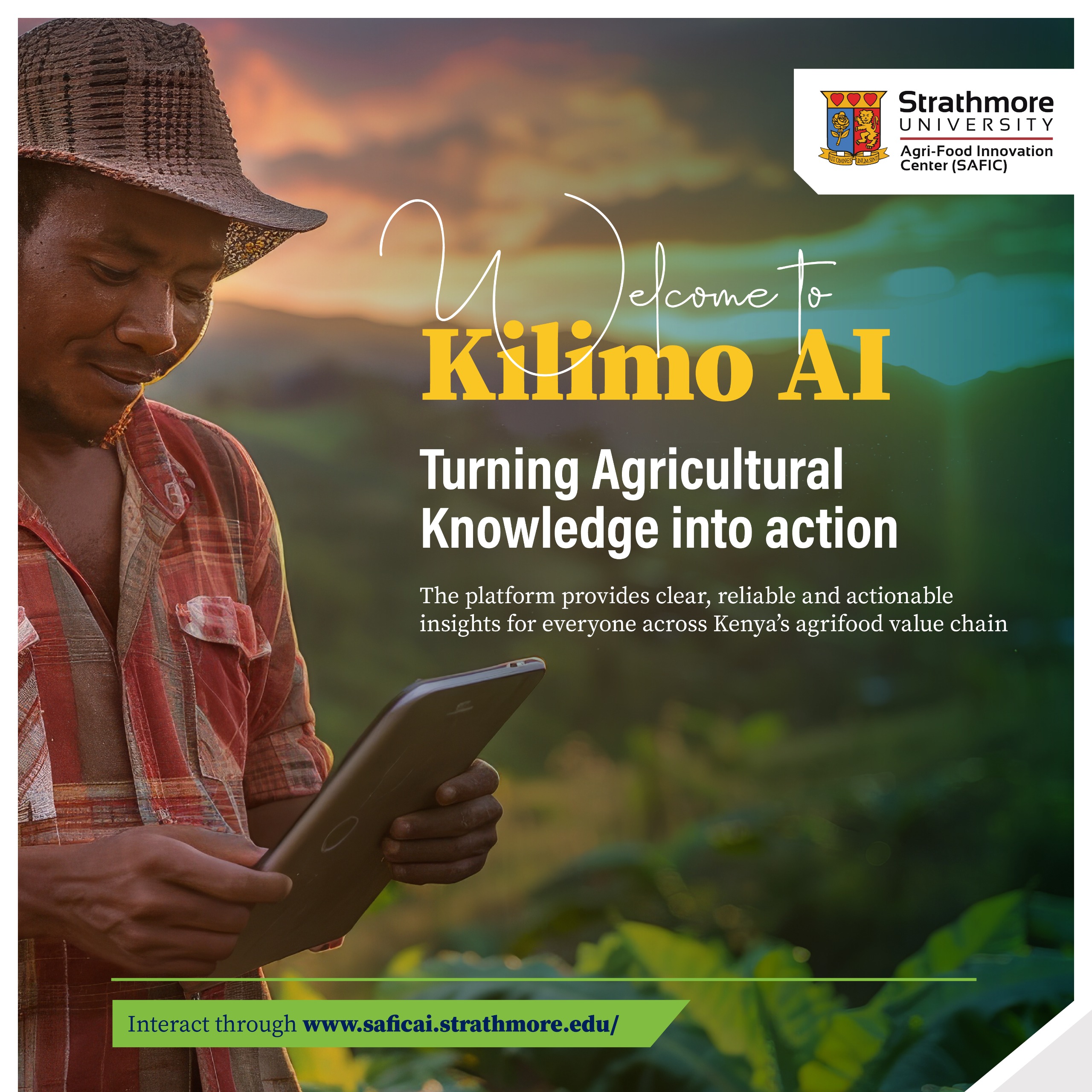
To bridge this gap, Dr. Mujibi outlined the vision for a National AI-driven Agriculture Advisory System, a Public Private Partnership (PPP) model that brings together government, research institutions, private sector players, and development partners to co-create a trusted digital platform. This system would offer accurate, localized, and affordable agricultural intelligence, serving as a true farming companion culturally, linguistically, and contextually relevant to Kenyan farmers.
At the heart of this initiative is Strathmore University, through SAFIC, positioning itself as the neutral orchestrator of this AI ecosystem. With its strong government alignment, extensive social capital, and verified convening power across public, private, and philanthropic sectors, Strathmore is uniquely placed to bridge institutional silos and guide the collaborative design of this national system.
He emphasised that Kenya must continue to invest in integrated digital infrastructure, institutional capacity, and farmer-centered design to make agricultural extension truly responsive and impactful.
As the discussion concluded, participants left with a shared conviction that the future of agricultural extension lies not just in providing advice, but in building intelligence within extension services.
Article By SAFIC Communications